All posts by Grace Hield

Accept your invitation to the flu vaccine

Our local NHS is encouraging the population to take up the flu vaccine this winter.

Following the interventions put in place for Covid-19, such as mask wearing, social distancing and restricted international travel, the cases of flu were extremely low globally in 2020 to 2021. As a result, fewer people are expected to be immune to flu between 2021 and 2022.

Projections indicate the 2021 to 2022 flu season could be 50 per cent larger than typically seen and it is also possible for people to suffer from flu earlier than usual.

Adding to the pressures already faced by the NHS, the coming winter will be the first in the UK when the flu virus (and other respiratory viruses) will exist alongside Covid-19, with there also being the possibility for both viruses to coincide.

Flu vaccinations are therefore an important priority to reduce morbidity and mortality associated with the virus, and to reduce hospitalisations during a time when the NHS and social care may also be managing winter outbreaks of Covid-19.

Video credit to ITV West Country

The following groups are eligible to receive their flu vaccinations this year:

  • Carers – young or adult
  • Health and social care workers
  • Residential Care home staff
  • Household contact of those in the NHS shieled list and immunocompromised individuals
  • At risk school aged children
  • All 2-3 year olds
  • Any individuals in at-risk groups
  • Over-50s

If you are eligible for the free flu vaccine, you may get it either from your own GP practice, once you are invited, or any pharmacy offering NHS flu vaccinations.

For more information on the flu vaccination, click here.

PCN mental health analytics project

One Care has been working with a Primary Care Network (PCN) over recent months to identify patients with an active mental health condition who might benefit from a tailored intervention.

The overall aim of the project is to improve outcomes for groups of patients with mental health troubles.

It has been widely recognised that Covid-19, and the wider effects of the pandemic, have significantly impacted mental health, aggravating pre-existing conditions as well as affecting people who have not previously experienced poor mental health.

One Care has been working with PCNs and system partners to understand how general practice can be supported to use data and analytics to get a better understanding of their population needs, highlight inequalities, and identify cohorts that would benefit from intervention.

One Care is delivering this mental health project to the unnamed PCN through a series of presentations and meetings, sharing an excel based tool and several reports produced using the system, R.

When comparing data from the PCN’s population between 2019 and 2021, as per the below graph, it’s clear to see the different percentage changes in patient activity for mental health (mh) and non-mental health cohorts.

January to March 2020 saw more patients across the two cohorts require medical attention in comparison to the same period in 2019, with the first lockdown reducing activity for both. But from June 2020 to present, there has been a substantial rise in activity for the mental health cohort.

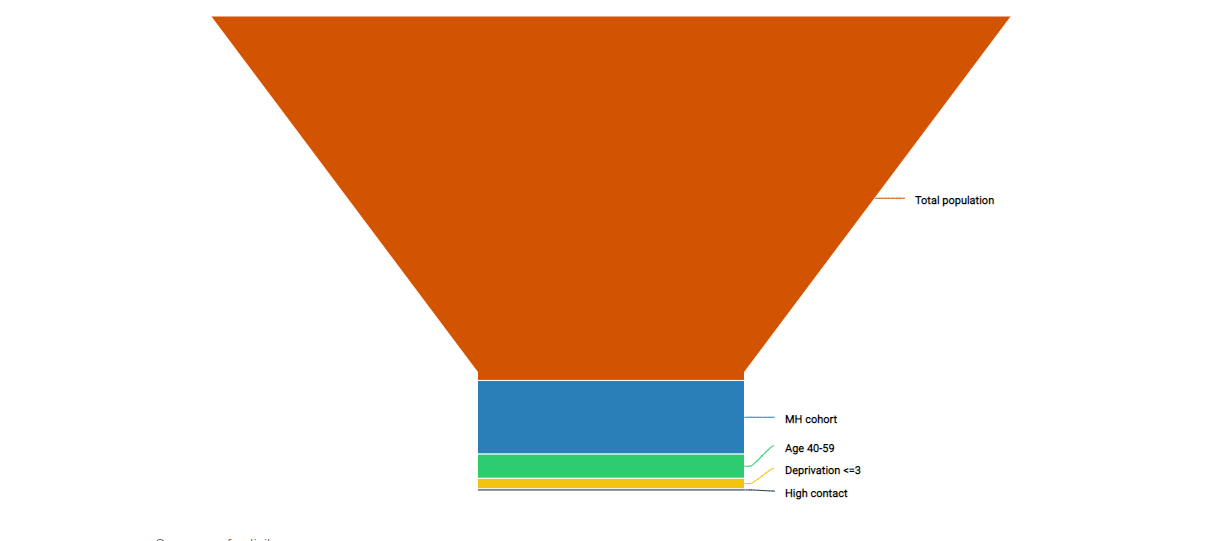
To achieve the desired outcome, One Care identified all patients with active mental health conditions using clinically agreed code sets, before they were narrowed down further using demographic, social and health information.

The below graph is a visual representation for how data was used to agree a criteria to identify a cohort of patients from the PCN population that will benefit from a specific tailored intervention.

Having collated all the data, One Care is able to compare the group with the rest of the PCN population, highlighting how their health needs and health service utilisation differ.

One Care’s business intelligence team have begun to uncover and highlight how within patients with an active mental health condition there were some distinct groups and outliers that might benefit from specific intervention.

Applying these pre-identified criteria means One Care can provide a list of patients, alongside their health and demographic information, to PCN clinical leaders and managers. These clinicians can now review the list of patients and decide on suitable intervention, which One Care can support.

One Care offer a number of direct support services to our practices, PCNs and localities. Our analysts have access to local practice data which we present back to our practices through the General Practice Intelligence Dashboards. Our team can work with practice or PCN staff to analyse the data and turn it into intelligence, empowering practices to make decisions based on up-to-date information about activity in their practice.

One Care is working on a model of support to offer this service to more PCNs in the future, so if you would like to carry out a similar piece of work in your area, please contact rhys.lewis@onecare.org.uk.

New features in the General Practice Intelligence Dashboard

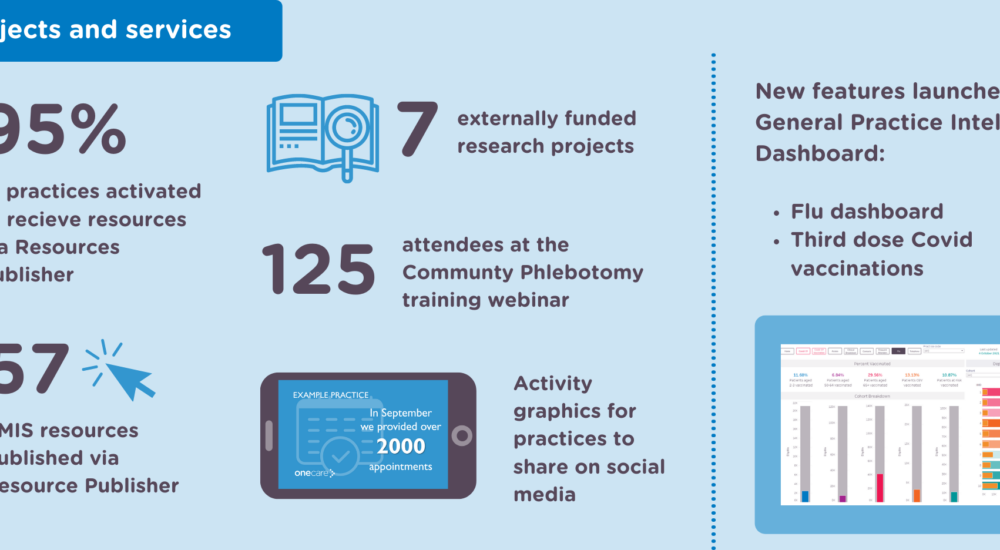
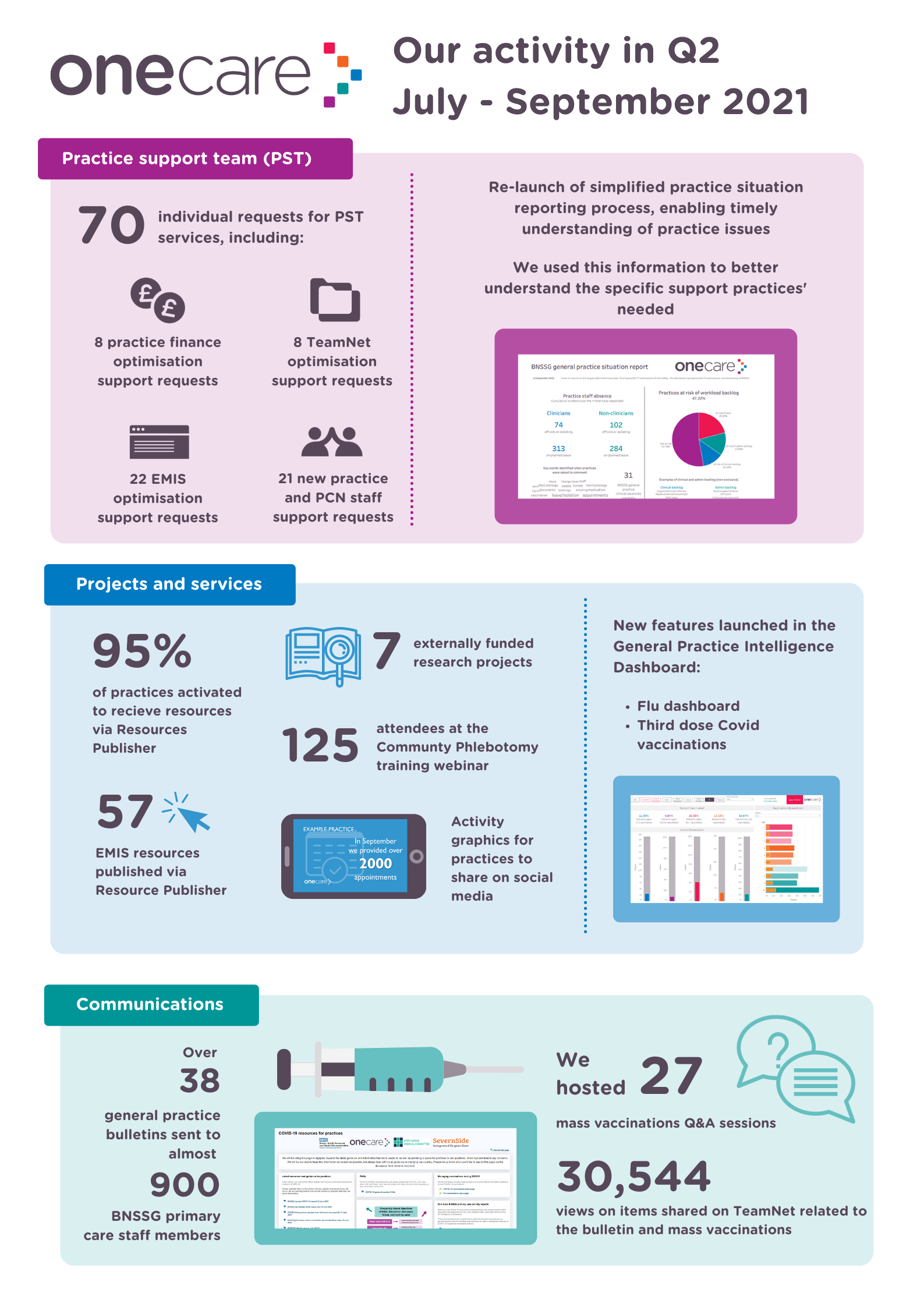
One Care is pleased to have launched three new features on the General Practice Intelligence Dashboard, making data more accessible for practices.

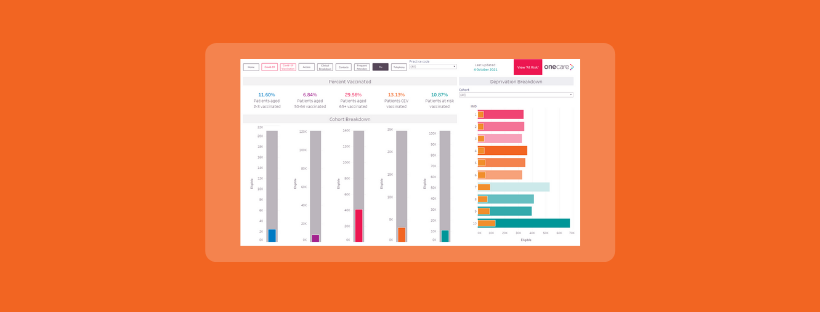
Building on the success of the COVID-19 vaccination dashboards that practices and Primary Care Networks (PCNs) have been using to monitor the vaccination uptake among their population since the programme started in November 2020, a third dose vaccination dashboard is now live. This enables practices to track and monitor the number of patients who have taken up a booster or third primary dose vaccination.

The dashboard also allows practices to view the data by cohort (age or clinical vulnerability), and to filter by deprivation and ethnicity, providing a greater insight into the patients who have and haven’t taken up the vaccination.

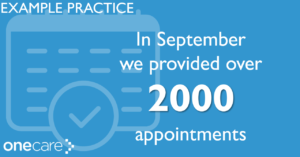
Additionally, One Care has launched a brand-new feature: activity graphics, designed predominantly for use on social media.

The idea for this feature has come directly from discussions with several practices. It is hoped these graphics will enable practices to publicise and demonstrate their volume of face-to-face appointments, phone calls and COVID vaccines. Practices can adjust the time frame where necessary, giving their patients a greater understanding of the demand, traffic and success within each practice.

One Care has also successfully redeveloped the flu page on the dashboard, meaning practices and Primary Care Networks (PCNs) can monitor the uptake of the 2021/22 season influenza vaccine in their populations.

Cohorts reported on, which will be updated twice weekly, include those aged 65+, 50-64 and 2-3, as well as the clinically extremely vulnerable and clinical risk groups.

Commenting on the new dashboard features, One Care’s Head of Business Intelligence Rhys Lewis said: “We are really proud to create and release these three updates to our General Practice Intelligence Dashboards.

“Following the success of last year’s flu vaccine page, we have relaunched this for the 2021/22 campaign with a similar simple design but further detail on uptake in clinical risk groups and by level of deprivation. Similarly, we have refreshed the Covid-19 vaccination dashboard to include booster doses. All of this information can be used to celebrate the success of vaccination programmes to date and highlight inequalities and opportunities to improve population coverage and maximise income.

“The update I am most excited about is our new practice infographics. This dashboard gives practices quick and easy access to infographics that can be used to represent the brilliant work they are doing. By taking a simple screenshot, practices can share these graphics using social media or even on the screens in their waiting areas.

“We are always looking to develop new features to assist our practices and the latest ones should make a real difference in making the data more accessible and detailed which is our ultimate aim, so huge credit to everyone behind the scenes for their efforts.”

Continuity of Care toolkit launch

We are proud to announce that the Continuity of Care resource toolkit we helped develop has now been launched nationally by the RCGP and Health Foundation.

This toolkit combines real-life examples, ready-to-use resources, and improvement methodologies. We developed it together with Morecambe Bay Primary Care Collaborative, through the work we did with our practices as part of the Health Foundation’s improving Continuity in General Practice programme.

Through this toolkit, GP practices across the country will be able to discover the evidence behind continuity and it’s benefits for both patients and clinicians whilst also helping to support colleagues in primary care to take the next practical steps to improve continuity, regardless of their current progress.

The toolkit can be accessed .

Dr Jon Hayes appointed new Chair of the GP Collaborative Board 

We are pleased to be able to announce the newly appointed Chair of the GP Collaborative Board (GPCB) as Dr Jon Hayes. Many of you will know Jon from his roles as GP Partner at Hanham Health since 1999, and Clinical Chair of Bristol, North Somerset and South Gloucestershire (BNSSG) CCG since its inception as an organisation in 2018. 

The interview process was led by a sub-group of GPCB members, consisting of Dr Nicola McGuinness, Dr Sarah Pepper, Dr Richard Berkley and Dr Lee Salkeld. Ruth Taylor, Chief Executive of One Care, was a non-voting observer and the panel was chaired by an independent member, Jeff Farrar, interim Chair of the Healthier Together Partnership Board and Chair of University Hospitals Bristol and Weston (UHBW). The panel put forward their decision to the Board for ratification in early September. 

On behalf of the recruitment sub-group, Dr Lee Salkeld said: 

“We are really excited about Jon’s appointment to the role of Chair of the GP Collaborative Board. He brings a wealth of experience, knowledge and relationships to the Board at this important time in our development. 

Throughout the recruitment process, Jon demonstrated that his 20+ years of working in grass roots general practice combined with his in-depth understanding of the intricacies of our health system mean that he is perfectly positioned to lead us through the challenges and opportunities ahead. 

The Board is looking forward to working with Jon to really cement the role of the GP Collaborative Board in representing, advocating, and working on behalf of general practice in our Integrated Care System.” 

Jon will remain as Chair of the CCG until March 2022 ahead of the transition to the new Integrated Care Board arrangements from April. He will, however, step down as Chair of the Clinical Executive on 31 November. This will ensure that he is not involved in commissioning decisions about primary care and mitigate the risk of any conflict of interest. He will take up his role as Chair of the GPCB in December. Until then, he will attend GPCB meetings as Chair designate, and Board meetings will be chaired by our Vice-Chair, Dr Katrina Boutin, whose appointment we announced in early August 2021. 

Commenting on the appointment, Dr Jon Hayes said: 

“I am thrilled to be appointed as the Chair of the GP Collaborative Board. 

General Practice has achieved so much over the last 18 months – from fast-tracking digital transformation, to driving the local vaccination roll-out and managing the current surge in service demand. Practices have forged new partnerships with our populations, communities and colleagues across the health and care system – and whilst it’s been tough, we have much to build on.  

The GPCB already plays a critical role in the health and care system, and will continue to do so – particularly as we move towards the statutory Integrated Care System (ICS) landscape. It’s important that we have a strong collective voice as general practice, and as the new Chair, I’m really looking forward to working closely with all practices across BNSSG to make that happen.” 

Dr Simon Bradley held the role of Interim Chair of the GP Collaborative Board since its inception in September 2020. On behalf of the GP Collaborative Board, Dr Katrina Boutin said: 

“We would like to offer heartfelt thanks to Simon for his visionary leadership, tenacity and commitment to the Board during his time in the role. He has been instrumental in taking the GP Collaborative Board from concept into reality.” 

Simon will continue to be a member of the GP Collaborative Board in his role as Chair of One Care. 

Our new Medical Director – Dr Mark O’Connor

We said goodbye to our Medical Director, Dr Jake Lee, earlier this year. We are very excited to announce that following an incredibly strong recruitment process, we have now appointed our new Medical Director, Dr Mark O’Connor.

Mark has been a GP in North Somerset since 1995. He has previously held positions with the LMC, North Somerset PCG, PCT and CCG. Recently returned from Qatar, he worked as an executive clinician within the national ambulance service to establish its first country wide integrated community healthcare service. He has a life-long interest in IT/AI and data analytics and is looking forward to playing an active part in One Care’s vision to ensure our member practices are properly resourced, practically supported and have a strong voice in the new collaborative structures to come.

We hope you will join us in welcoming him to One Care and wishing him every success in his new role.

Continuity of care project closure

The One Care continuity of care programme draws to a close this month. Despite the challenges posed by Covid, 23 practices took part in the project and each embarked on their own continuity of care journey. All hints and tips from the practices have been captured in a resource toolkit which will soon be hosted on the RCGP website shortly. Our data shows practices were able to improve their continuity by up to 15% across their practice list. There were even greater improvements in continuity where the focus was on a particular cohort of patients.

We’ve built a timeline of the project, which can be found here:

One of the primary  outputs of this project is a resource toolkit to help implement continuity of care in the practice. The toolkit provides:

  • Practical suggestions on how to improve continuity.
    A way to measure continuity using the Usual GP Measuring Tool, developed by One Care Digital Team.  There are 4 measures available in this easy-to-use Tool.  The Tool is based on consultation activity and shows how consultation activity is spread across your practice.  For example, you will be able to see if your frequently attending patients are shared evenly across the team.
  • Communication material including leaflets and posters together with an animation which you can show on our website or in the waiting room.
    The Resource Toolkit is currently on One Care Team Net but later this month it will be hosted on the Royal College of GPs (RCGP) website, following the demonstration at this year’s RCGP conference and testing by practices across England and Scotland.
    Our practices approached continuity in different ways from those who had already have personal lists looking to further improve continuity, to those testing microteam approaches, to those focusing on a particular cohort of patients. Our data shows practices able to improve their continuity by up to 15% across their practice list.  Even greater improvements were made where the focus was a particular cohort of patients.

As a project we learned:

  • Through our surveys and conversations that continuity matters to both patients and staff
  • Practices regardless of their list size can achieve good levels of continuity, including those that are multi-site.
  • Where the practice has continuity of care processes in place, GPs on low sessions achieve continuity levels on par with GP working a high number of sessions.
  • Practices in deprived areas of Bristol can achieve good levels of continuity.
  • Focusing on a small cohort of patients, has a ripple effect so overall continuity at the practice improves.

We’d like to thank all the practices who were able to take part, and look forward to seeing the impact continuity plays on patients in BNSSG going forward.

Introducing the GPCB

According to The King’s Fund, “Integrated care systems (ICSs) are partnerships that bring together providers and commissioners of NHS services across a geographical area with local authorities and other local partners to collectively plan health and care services to meet the needs of their population. The central aim of ICSs is to integrate care across different organisations and settings, joining up hospital and community-based services, physical and mental health, and health and social care. All parts of England are now covered by one of 42 ICSs.”

The government’s recently published White Paper takes this ambition even further. Increasingly, boundaries need to be broken down between organisations in the healthcare system and new ways of working developed as providers come together to create more efficient and patient orientated pathways. General practice being able to come together as one body to participate in peer-to-peer conversations with other large-scale providers is a key enabler of this.

We are pleased to announce that in response to this need, general practice across Bristol, North Somerset and South Gloucestershire has come together to form the GP Collaborative Board (GPCB).  The GPCB brings together all practices, Primary Care Networks (PCNs) and localities in BNSSG, supported by One Care and Avon LMC.

In 2020, practices asked One Care and Avon LMC to work with them to develop and implement an ethical decision-making process and good governance framework for general practice. In September 2020, we took the decision to stand up a Shadow GP Collaborative Board to shape this framework and make decisions about what the GPCB should look like. In April 2021, the GPCB moved out of shadow form and the members came together as a substantive Board for the first time.

The GPCB has four main functions:

  • Coordinating representation of general practice within system governance structures.
  • Ratification of new pathways and strategy.
  • Informing to ensure accurate, relevant and timely information flows to, from and throughout general practice.
  • Enabling general practice to come together at scale, giving a vehicle for provider-to-provider conversations.

The GPCB has already begun to establish itself as an important partner within the BNSSG Integrated Care System.  Find out more about the GP Collaborative Board.

If you want to know more about the GP Collaborative Board, get in touch with us – GPCollaborativeBoard@onecare.org.uk.

One Care making an impact in 2020/21

As we come to the end of 2021/21, we have developed an impact report to demonstrate the work we have done to support our member practices this year 

It’s been a strange and challenging year for us all. We have focused many of our efforts on supporting practices with the COVID response, which meant some of our other activities were paused for a time, then restarted later in the year.

The report includes details of all these COVID activities, as well as our Practice Support Team work which includes digital and analytics support. It also covers improved access, continuity of care and set up of the GP Collaborative Board.

We hope you find this a useful summary of how we have supported our member practices this year. If you have any questions, get in touch with us on enquiries@onecare.org.uk.

Celebrating general practice vaccination delivery

Monday 15 February marked an important milestone in the delivery of the vaccination programme as we met national targets by vaccinating the top four priority groups as set out by government. We wanted to take this opportunity to celebrate the incredible work the practices and PCNs in BNSSG are doing, delivering around 70% of the vaccines across Bristol, North Somerset and South Gloucestershire.Please click the link for a full size image

We have therefore created this infographic to show just some of the figures that reflect the achievements of BNSSG between December and February. We hope the infographic helps demonstrate our celebration and gratitude to the doctors, nurses, pharmacists, administrative and support staff, managers, volunteers and everyone else too – it’s been a brilliant effort.

We all know there is still some way to go, but we hope that practices are able to take a moment to reflect and congratulate themselves on what they and their teams have been able to achieve in a short space of time.

Many thanks from all of us.